
 By Hashim Hashmi
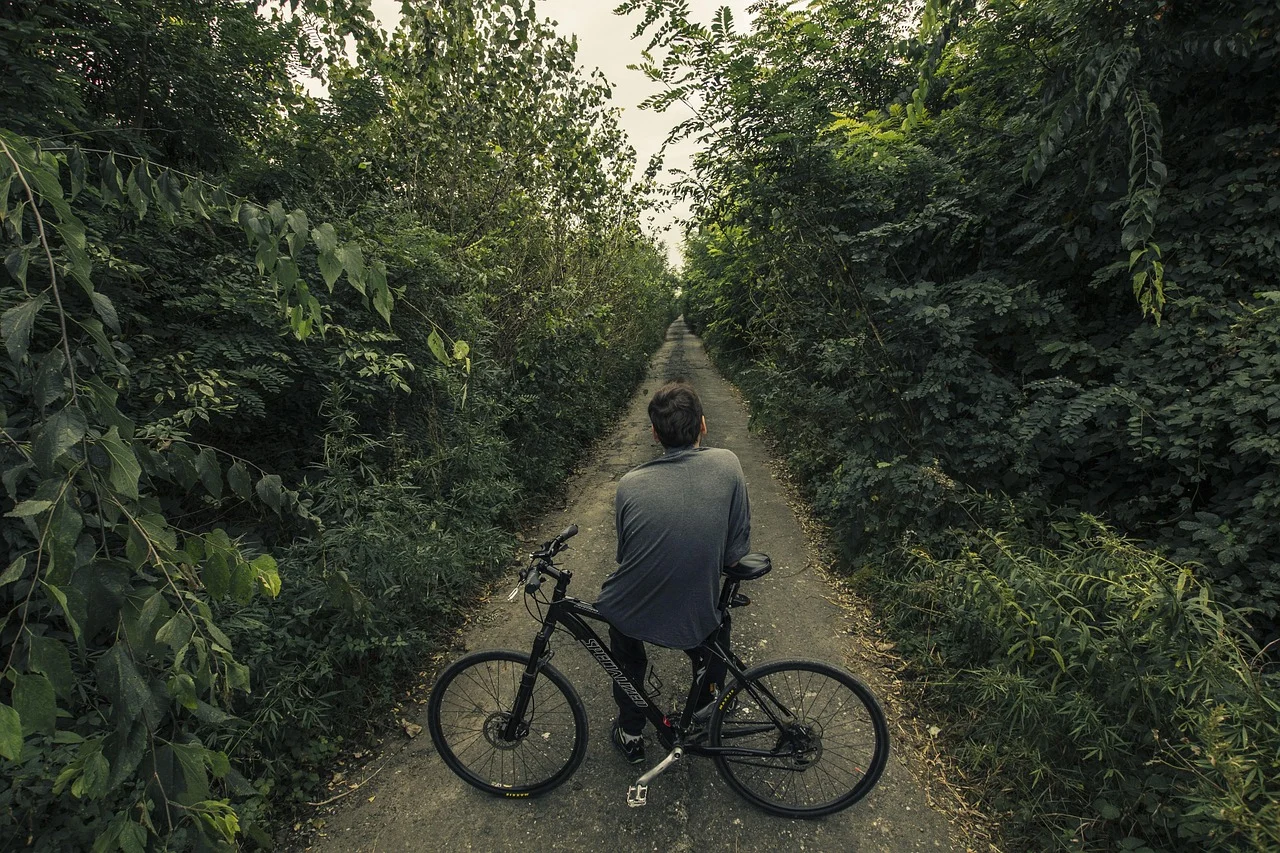
This guide explains how to find and plan your journey using official resources and mapping apps, details essential gear and clothing for touring variable terrain, and highlights top routes across the country.
What is the National Cycle Network (NCN) and How Does it Work?
The National Cycle Network (NCN) is the backbone of long-distance cycling in the UK. It comprises a vast network of signed routes managed by the Walk Wheel Cycle Trust (formerly Sustrans). This network combines 5,158 miles of traffic-free paths with 7,519 miles of on-road sections. [walkwheelcycletrust.org.uk] We designed it to be accessible for a competent 12-year-old cycling unaccompanied, though conditions can vary.
The NCN is not a single, continuous trail but a collection of interconnected routes, each numbered and signposted with distinctive blue and red signs. These routes aim to link major towns and cities, as well as scenic rural areas, making it possible to traverse significant portions of the UK by bike. While many sections are traffic-free, utilising old railway lines or canal paths, others use quieter country roads, or occasionally busier roads where no alternative exists. When planning long distance cycle routes uk, we always recommend checking the specific route details, as the ‘traffic-free’ status can sometimes be misleading, encompassing short sections of shared-use paths that still require caution.
Funding plays an important role in the development and maintenance of long distance cycle routes in the UK. In September 2026, the UK Transport Secretary announced a significant £104 million investment for the NCN in England. The government will distribute this over four years. Officials will earmark this funding for repairing bridges, renewing signage, widening and resurfacing paths. The government will create new traffic-free sections and remove barriers for all users, including those with wheelchairs. The Walk Wheel Cycle Trust aims to achieve 1,000 miles of new or improved network by 2030. This should enhance the overall cycling experience.
How Do I Find and Plan Long Distance Cycle Routes in the UK?
To find and plan long-distance cycle routes in the UK, we advise starting with the official Walk Wheel Cycle Trust website, which offers detailed maps and route descriptions, and then supplementing this with apps like Komoot or Cycling UK’s resources for more granular planning and alternative suggestions.
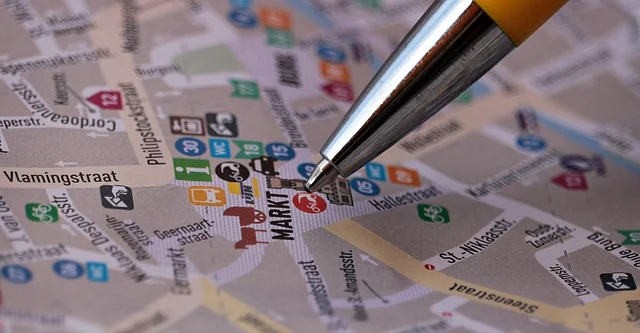
The Walk Wheel Cycle Trust website is your primary resource for NCN routes. It provides interactive maps, route guides, and important updates on closures and diversions. For example, a section of Route 1 (Water Rail Way) between Lincoln and Washingborough is closed until November 2026 for widening and resurfacing, and Route 4 between Maidenhead and Windsor is fully closed from November 2026 to June 2027 for repair works. Route 51 in Buckinghamshire also has a section closed until November 2026 due to HS2-related roadworks. Always check these specific alerts before you set out to avoid unexpected detours.
Beyond the NCN, organizations like Cycling UK offer a range of curated long-distance routes, often with a focus on bikepacking and gravel riding, such as the King Alfred’s Way or Traws Eryri. These routes may feature more off-road sections and require different bike setups than typical NCN routes.
For detailed navigation and offline mapping, apps like Komoot are invaluable. They allow users to plot routes, download maps, and discover user-generated tours, often with elevation profiles and surface information. This level of detail is important for understanding the demands of a route, especially when considering the mix of traffic-free paths and on-road sections. We always recommend downloading maps for offline use, as mobile signal can be unreliable in remote areas of the UK.
Choosing the Right Route for Your Experience Level
When selecting a route, consider your cycling experience, fitness level, and the type of bike you have. Routes like the C2C (Coast to Coast) are popular and well-supported. However, they involve significant climbing in parts, particularly across the Pennines. For an easier introduction to long distance cycle routes in the UK, people often seek flatter NCN routes. These might follow canal towpaths or disused railway lines, which typically have gentler gradients and more consistent surfaces. Some routes, like sections of the Caledonia Way in Scotland, offer stunning scenery. However, they can be more challenging due to remoteness and changeable weather.
What Essential Gear Do I Need for Long Distance Cycle Touring in the UK?
You need solid panniers or bikepacking bags for long-distance cycle touring in the UK. They are essential for carrying kit. You also need reliable waterproof clothing, a well-maintained bike, and comprehensive repair tools to handle varied conditions and potential remoteness of routes.
Bike Setup: Your bike needs to be comfortable and reliable. A touring bike, gravel bike, or even a sturdy hybrid can be suitable, provided it’s well-maintained. Ensure your tyres are appropriate for the expected terrain – wider, more solitireses are better for mixed surfaces and gravel. You should always check brakes, gears, and chain thoroughly before any long trip. A mechanical issue far from a bike shop can quickly derail plans.
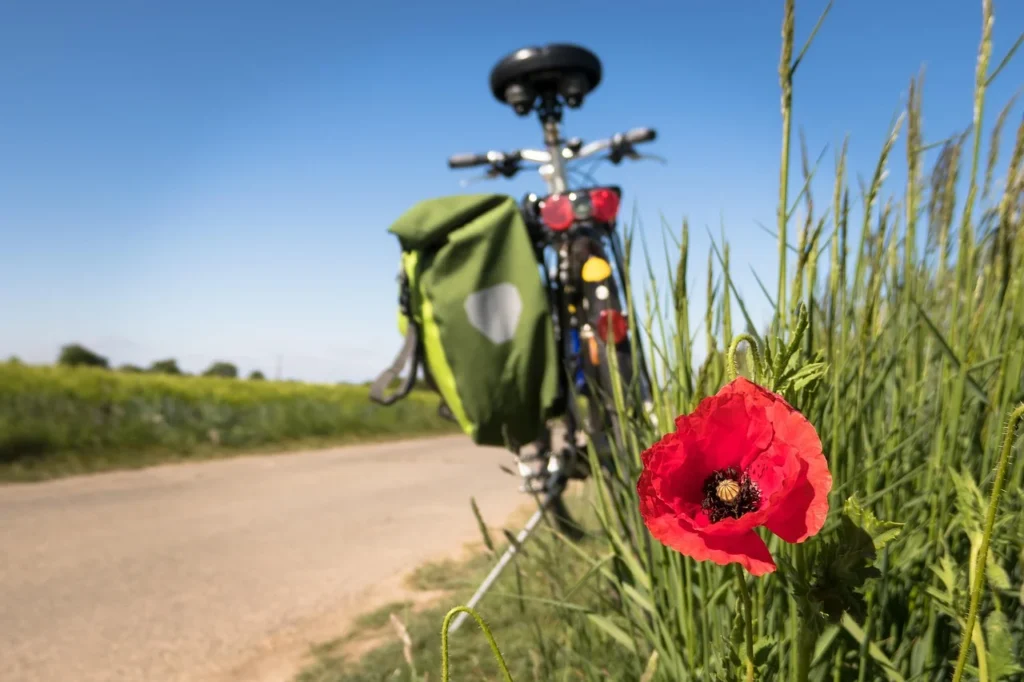
Luggage: The choice between traditional panniers and bikepacking bags depends on your preference and the route. Panniers offer more capacity and are easier to pack, ideal for supported touring or less technical routes. Bikepacking bags (frame bag, saddle bag, handlebar roll) distribute weight more centrally and are better for off-road or more technical trails where clearance is an issue. Whichever you choose, ensure they are waterproof or come with waterproof covers, as UK weather is famously unpredictable.
Clothing navigation and safety
Clothing: Layers are key. You will need waterproof and windproof outer layers (jacket and trousers) that are breathable. Base layers, a mid-layer, and cycling shorts with a good chamois are fundamental for comfort. Don’t forget a warm hat and gloves, even in summer, as temperatures can drop quickly in exposed areas, particularly in the north or at higher elevations.
Navigation and Safety: A GPS device or a smartphone with offline maps (like Komoot) is critical. A power bank is also essential to keep your devices charged. High-visibility clothing and good quality lights (front and rear) are non-negotiable, especially if you plan to cycle in low light or through tunnels. A first-aid kit, emergency blanket, and a whistle are also important safety items.
For a long trip, it is advisable to always carry a multi-tool, tyre levers, a puncture repair kit, a spare inner tube (or two), and a small pump. Knowing how to use these items is just as important as having them. A chain tool and spare quick-link are also wise additions, as chain issues are common on long rides. Consider carrying a spare derailleur hanger if your bike has one, as these can be route-ending failures.
What Are Some of the Best Long Distance Cycle Routes in the UK?
The UK boasts numerous excellent long-distance cycle routes, with some of the most popular and rewarding including the Coast to Coast (C2C), King Alfred’s Way, and the Caledonia Way, each offering distinct challenges and scenic experiences across varying terrains.
Coast to Coast (C2C)
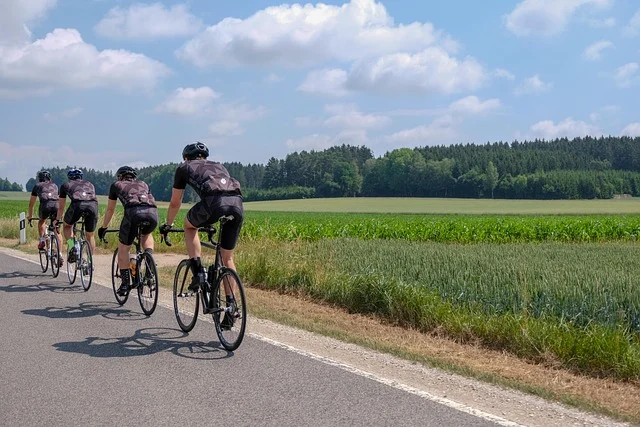
The C2C is arguably the UK’s most famous long-distance cycle route. It stretches approximately 140 miles from Whitehaven or Workington on the west coast to Sunderland or Tynemouth on the east. It’s a challenging ride, particularly over the Pennines, with significant climbs like Hartside Pass (though alternative, gentler routes exist). The C2C offers a fantastic sense of achievement. You traverse stunning landscapes from the Lake District fells to the industrial heritage of the North East. It’s well-signed and has plenty of accommodation options along the way. This makes it a great choice for a first multi-day tour, though we recommend good fitness.
King Alfred’s Way
King Alfred’s Way is a more recent addition to the long-distance scene. It is a 350km (217-mile) circular off-road route through the heart of Wessex, developed by Cycling UK. This route is predominantly off-road, utilising bridleways, byways, and quiet lanes. This makes it ideal for gravel bikes or mountain bikes. It passes iconic landmarks like Stonehenge and Avebury, offering a deep dive into ancient landscapes. It’s a challenging route, often requiring strong navigational skills and self-sufficiency. However, it is incredibly rewarding for those seeking an adventure away from tarmac.
Caledonia Way (NCN Route 78)
Stretching over 230 miles from Campbeltown to Inverness, the Caledonia Way offers a spectacular journey through the Scottish Highlands. This route combines stunning coastal roads, quiet forest tracks, and sections along the Caledonian Canal. It’s a fantastic option for experiencing Scotland’s dramatic scenery, including Loch Lomond & The Trossachs National Park and the Great Glen. While some sections are traffic-free, a good portion is on quiet roads, and the weather can be a significant factor. Riders should prepare for all conditions and appreciate the remoteness and wild beauty this route provides.
Other Notable Routes
- Hadrian’s Wall Cycleway (NCN Route 72): Approximately 170 miles, following the ancient Roman frontier from coast to coast, offering a mix of historical sites and scenic views.
- Lôn Las Cymru (NCN Route 8): A challenging 250-mile route from Holyhead to Cardiff or Chepstow, traversing the length of Wales through mountains and valleys.
- North Coast 500 (NC500): This is primarily a driving route. The 516-mile circuit of the Scottish Highlands is also a formidable cycling challenge. It requires careful planning due to its popularity with vehicles and exposed sections. We only recommend this for experienced road cyclists comfortable with heavy traffic and significant climbs.
Common Misconceptions About Cycling Long Distances in the UK
Several persistent myths about cycling in the UK can deter riders. Understanding the reality helps you plan a safer and more enjoyable long-distance trip. People often express concerns about ‘road tax’ or mandatory cycle lane use. Both of these are misconceptions.
The ‘Road Tax’ Myth
A common belief is that cyclists do not pay ‘road tax’ and therefore have less right to the roads. However, ‘road tax’ was abolished in 1937 and replaced with Vehicle Excise Duty (VED), which is based on vehicle emissions. All road users, including cyclists, contribute to road funding through general taxation. Therefore, cyclists have every right to use the roads, just like any other vehicle.
Mandatory Cycle Lane Use
Another misconception is that cyclists are legally required to use cycle lanes. The Highway Code states that cycle lanes are not compulsory. Cyclists can exercise their judgment based on safety, experience, and skills. Often, cycle lanes can be poorly maintained or obstructed. They can also put cyclists in a dangerous position at junctions. We always advocate for cyclists to position themselves where they feel safest and most visible. This sometimes means taking the primary position in the lane, especially on quieter roads or approaching junctions.
Cycling Two Abreast
Some drivers believe cyclists are not allowed to ride two abreast, but the Highway Code actually encourages it where there is room. Riding two abreast can be safer, making cyclists more visible and discouraging dangerous close-pass overtaking. It allows for easier conversation and can also reduce the overall length of a group, making it quicker for vehicles to overtake safely when appropriate. This practice is found to be particularly beneficial on long, open roads where visibility is good.
Air Pollution Exposure
Finally, there’s a myth that cyclists are exposed to more air pollution than other road users. Studies suggest the opposite. Cyclists may be exposed to less pollution than those in cars or buses. This is because cyclists are often on the periphery of traffic flow and benefit from greater air circulation. Car occupants are enclosed in a ‘pollution tunnel’ effect within traffic. While pollution is a concern for everyone in urban areas, it shouldn’t be a primary deterrent for long-distance cycling, especially on rural routes.
Final Thoughts on Your UK Long Distance Cycling Adventure
You can embark on a long-distance cycle route in the UK. This is a fantastic way to explore the country’s diverse landscapes, rich history, and vibrant communities. With careful planning, the right gear, and an understanding of the routes, you can create an unforgettable adventure. We always recommend starting with a well-maintained bike. You should pack for all weathers, and familiarize yourself with the route details, including any current closures. The sense of achievement from traversing significant distances under your own power is truly unmatched. Whether you choose a classic like the C2C or a challenging bikepacking route, the UK’s network offers something for every level of rider.
Frequently asked questions
Are long distance cycle routes in the UK suitable for beginners?
Many sections of the National Cycle Network suit beginners, particularly flatter routes along disused railway lines or canal towpaths. However, some long-distance routes require a good level of fitness and cycling experience. This applies especially to those with significant climbs or off-road sections.
Can I do long distance cycle routes in the UK with an e-bike?
Yes, e-bikes are perfectly suitable for long-distance cycle routes in the UK and can make challenging routes more accessible. We recommend ensuring you have adequate battery range for each day’s riding and planning charging stops, especially in more remote areas.
Do I need special insurance for long distance cycling in the UK?
While not legally required, we advise considering specialist cycling insurance that covers personal liability, bike theft, and accidental damage, especially for expensive touring bikes or e-bikes. Travel insurance that covers cycling activities is also wise if you are travelling a significant distance from home.