
 By Hashim Hashmi
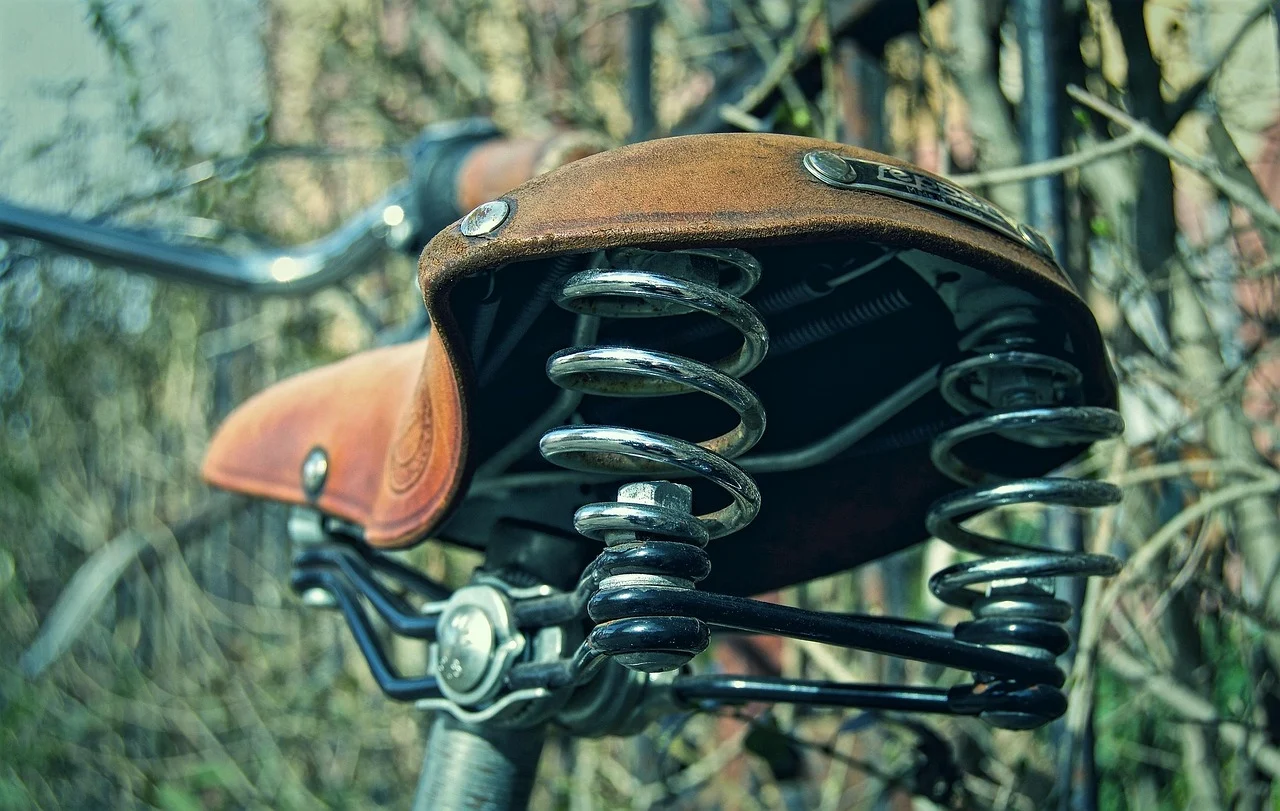
Female cycling saddles provide targeted support essential for preventing pain, numbness, and chafing, by accommodating unique female anatomy such as wider sit bones and a wider, lower pubic arch. These specialized saddles feature wider rear seating platforms, shorter nose lengths, and ergonomic relief zones to protect sensitive soft tissue.
Finding the right saddle requires matching its width to your sit bone distance, adding 15 to 30 millimeters based on riding posture, and selecting a central cut-out or relief channel. It also involves choosing a firmness that suits your riding stance.
This article explains how to accurately measure your sit bone width at home, details key features of the best female cycling saddles, compares different design profiles, and helps you select a saddle for your specific riding discipline, whether road, mountain, gravel, or urban cycling.
Are women’s bike saddles genuinely different from men’s saddles?
Women’s saddles are unique. They accommodate female anatomy. For example, women typically have wider sit bones. They also have a wider, lower pubic arch. Male pelvic structures differ. So, female cycling saddles have wider rear seating platforms. They also feature shorter nose lengths. These saddles include ergonomic relief zones. This prevents pressure on sensitive soft tissue.

Your sit bones should bear most of your body weight when you ride. A narrow saddle makes your sit bones overhang the edges. This forces delicate tissue to bear the load. This tissue includes nerves, blood vessels, and labial tissue. As a result, you may experience numbness, swelling, chafing, and bruising. When you lean forward, your pelvis tilts. This brings your pubic bone and anterior soft tissue into contact with the saddle’s nose. Gender-specific designs for female cycling saddles address this problem. They broaden support across your sit bones. They also relieve pressure along your central genital structure.
Padded shorts offer cushioning. However, they cannot fix a poorly supportive saddle base. Unisex saddles often fit narrower sit bone spacing. This can push female riders forward. It may also concentrate pressure along the central seam. Therefore, choose a well-designed female cycling saddle. It provides proper biomechanics and skeletal support.
How to measure your sit bone width accurately at home
You need an accurate measurement of your sit bone spacing. Get this before buying a saddle. Do not rely on pant size or height. These are inaccurate measurements. Hip width and sit bone spacing do not directly correlate with clothing sizes.

Follow these steps to measure your sit bones at home:
- Place corrugated cardboard or aluminum foil on a hard, flat surface. For example, use a wooden stool or an uncarpeted step.
- Sit on cardboard. Bend your knees to a 90-degree angle. Pull your feet slightly toward you. This mirrors your riding posture.
- Lean forward slightly at your hips. This simulates your body angle on the bike. Press down through your feet. Hold this for 15 seconds. As a result, you will leave two distinct impressions.
- Stand up and locate the deepest point in the centre of each impression. Mark these central points with a pen.
- Measure the exact distance between the two marks in millimetres using a ruler.
Once you measure your sit bones, add an allowance. Base this on your primary riding position. This calculates your recommended saddle width.
- Upright posture (city and leisure bikes): Add 25 to 30 mm to your sit bone width.
- Moderate posture (gravel and endurance road): Add 20 to 25 mm to your sit bone width.
- Aggressive posture (aero road and racing): Add 15 to 20 mm to your sit bone width.
For example, your sit bones might measure 125 mm. If you ride an endurance road bike, look for a women’s Bike Saddles. Choose one around 145 mm to 150 mm wide. However, a saddle can be too wide. Then, the rear flaring rubs against your thighs. This causes painful inner thigh chafing. It also restricts your hamstring during the pedal stroke.
Key features of the best female cycling saddles
Selecting the right saddle requires looking beyond base width. Profile curvature, nose length, relief openings, and foam density all dictate how comfortable a saddle remains over hours of riding.

Cutouts versus relief channels
Central cutouts remove material completely from the middle section of the saddle, eliminating surface contact across sensitive soft tissue. This design works well for riders who experience numbness or central swelling. However, full cutouts can concentrate pressure along the firm edges of the cutout if the saddle width is incorrect.
Recessed relief channels reduce height in the central zone. However, they do not leave an open hole. Some manufacturers fill this channel. They use flexible, lower-density foam or elastomeric membranes. For example, designs for female cycling saddles, like Specialized’s Mimic technology, use layered foam densities. This occurs across a flexible central insert. It supports soft tissue without creating distinct edge pressure points. High-performance saddles prioritize these engineered support zones. This helps maintain blood flow. Also, it prevents nerve compression.
Short-nose versus traditional long-nose saddles
Short-nose saddles have a shorter length. They are typically 240 mm to 250 mm. Traditional models are 270 mm to 280 mm. Also, short-nose saddles for female cycling saddles have a slightly wider nose. This design lets you rotate your pelvis forward. You can achieve an aerodynamic position. It also avoids excess force on your soft tissue. As a result, it prevents you from sliding forward. This is helpful during steep climbs. However, traditional long-nose saddles work better. They suit riders who frequently move to shift muscle engagement.
Padding density and shell flex
Thick, squishy padding might feel soft at first. However, it often causes discomfort on long rides. Deep padding compresses under your sit bones. This causes excess foam to push upward. It creates friction, heat, and numbness in your central soft tissue. High-performance women’s bike saddles use firm, high-density EVA or PU foam. This foam supports your skeleton. It does not bottom out.
3D-printed padding technologies provide tuned cushioning zones. They offer firmer support directly beneath the ischial tuberosities. Also, they provide softer compliance across sensitive zones. Flexible nylon or carbon composite shells further absorb high-frequency road vibrations. This prevents vibrations from reaching your spine.
Comparing saddle designs for female riders
Choosing between different saddle shapes depends on your flexibility, riding stance, and tissue sensitivity. The table below compares four major female saddle design profiles:
| Design Profile | Best For | Pressure Relief Style | Support Level | Trade-offs |
|---|---|---|---|---|
| Short-Nose Cutout | Aggressive road, gravel, and endurance riding | Full central opening to eliminate soft tissue pressure | Firm sit bone support with reduced front length | Requires precise fore-aft and tilt setup to avoid edge pressure |
| Full Relief Channel | Long-distance touring and gravel riding | Depressed central channel with variable-density foam | Continuous contact surface without sharp edges | May apply light pressure if foam compresses over long miles |
| 3D-Printed Lattice | High-mileage road and competitive racing | Zoned polymer lattice with variable compression resistance | Customized support zones across sit bones and nose | Higher cost and harder to clean off mud and trail grime |
| Traditional Long-Nose | Riders who shift positions frequently on climbs | Mild channel or subtle relief dip | Long contact area for varied seating positions | Can cause soft tissue numbness when rotating pelvis forward |
Selecting a saddle for your specific riding discipline
Your riding discipline determines your body angle. It also affects bike movement and weight distribution. A saddle for road racing may cause discomfort on a technical trail. In addition, an urban saddle will feel bulky on a fast road ride.

Female road bike saddles
Road cyclists maintain a forward-leaning posture for extended periods. This position rotates the pelvis forward and increases front saddle pressure. Women’s road bike saddles typically feature a short-nose profile, a central cutout or relief channel, and firm padding. This construction maintains pelvic stability, supports power transfer, and protects soft tissue when riding in the drops.
Ladies mountain bike saddle
Mountain biking involves frequent standing, weight shifts, and rapid maneuvering over technical terrain. Mountain bike saddles feature rounded rear edges to prevent your shorts from catching when moving behind the saddle on descents. They also use durable side bumpers to resist impact damage and medium-density padding to absorb impacts from trail chatter. For more, see our Ladies MTB Bikes Guide.
Gravel and endurance riding
Gravel and adventure cycling require comfort over long hours on unpaved roads. Saddles for gravel riding combine the aerodynamic shaping of road saddles with added vibration absorption. Flexible carbon-injected shells and shock-damping padding help reduce fatigue caused by gravel chatter without adding excessive weight.
Commuting and urban riding
Commuters sit in an upright position. They place nearly all their body weight directly onto their sit bones. Therefore, commuting saddles are wider. They often measure 160 mm to 175 mm. These saddles also feature thicker padding or gel inserts. They support a 75- to 90-degree trunk angle. Cutouts are wider to prevent pressure build-up during slow-speed upright riding.
Setting up your saddle correctly for maximum comfort
Even the best female cycling saddle will cause pain if fitted improperly. Height, tilt, and fore-aft position directly dictate how pressure distributes across your pelvis and back.
Adjusting saddle height
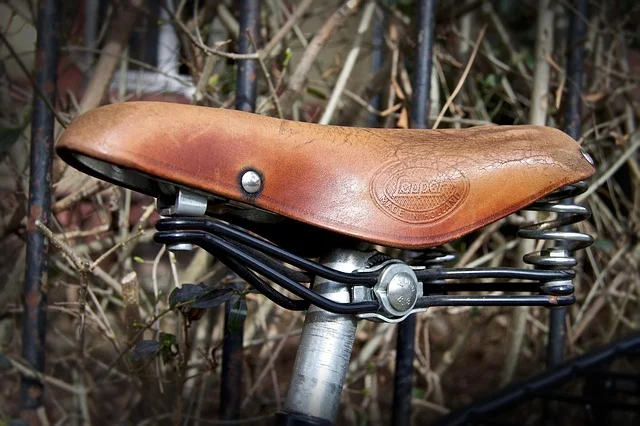
If your saddle is too high, your hips rock from side to side. This happens with every pedal stroke. It causes severe chafing, lower back strain, and saddle sores. If it is too low, your knees bear excess load. Also, your pelvis tilts backward. This causes improper posture.
First, establish a baseline height. Sit on your bike and hold onto a wall. Place your heel on the pedal at its lowest point. Your leg should be fully straight. Do not lean your hips. When clipped in or using the ball of your foot, this creates a 25- to 35-degree knee bend. This occurs at the bottom of the pedal stroke.
Setting saddle angle
Saddle angle is critical for controlling weight distribution between your arms and pelvis. Start with the saddle completely level, placing a spirit level across the front two-thirds of the seat.
If you experience central soft tissue pressure, try a slight downward nose tilt. Tilt it 1 to 2 degrees. However, avoid tilting the nose down more than 3 degrees for female cycling saddles. Excessive downward tilt causes you to slide forward. This places strain on your hands, wrists, and shoulders. It also pulls your body off the sit bone support zone. Never tilt the nose upward. This presses hard into delicate tissues.
Setting fore and aft position
Moving the saddle forward or backward along its rails changes your reach to the handlebars. It also alters muscle activation. Position your saddle correctly. When the pedal crank is horizontal (at the 3 o’clock position), a plumb line hung from the front of your kneecap should drop straight through the pedal axle center. This neutral alignment optimizes quad and glute balance. It also keeps your hips stable.
Troubleshooting female cycling saddle pain and issues
Understanding the specific cause of saddle pain helps you fix the issue quickly.

Soft tissue numbness or swelling (female cycling seat issues)
Numbness or swelling in the labial or perineal area indicates nerve or blood vessel compression. If this occurs, your saddle is either too narrow, lacking a sufficient central cutout, or tilted nose-up. First, verify that your saddle width matches your sit bone measurement. If width is correct, lower the nose by 1 degree or switch to a short-nose cutout saddle.
One-sided saddle sores or hip pain (female cyclist saddle sores)
Soreness on only one side usually points to a functional leg length difference, hip asymmetry, or pelvic rotation. It can also mean your saddle is too high, causing you to reach further on one side. Lower your saddle height by 3 to 5 millimetres and check whether your saddle is straight along the top tube line.
Inner thigh chafing
Chafing along your inner thigh or hamstring crease indicates a problem. It means the saddle profile flares out too quickly. This happens from the nose to the rear platform. Look for a saddle with a narrower mid-section transition. You can also step down 5 mm in total width. Just make sure your sit bones remain supported.
Interaction with cycling shorts and chamois
Your saddle works as a system alongside your shorts. Wear bib shorts or padded shorts without underwear, as underwear seams create friction and hold moisture against the skin. Ensure the chamois pad lies flat against your body without folding or bunching. Using a targeted chamois cream reduces friction on long rides. For sizing tips, see How to Choose Assos Bib Shorts for Your Riding Style.
Evaluating your clothing alongside your saddle ensures long-term comfort. Finding the right combination allows you to ride longer and stay completely comfortable on every terrain.
Related reading
- performance
Frequently asked questions
Are women’s bike saddles genuinely different from men’s saddles?
Yes, women’s saddles feature wider rear support platforms. They also have shorter overall nose lengths. Additionally, they include customized central relief zones. These account for wider sit bone spacing and pelvic tilt dynamics. Therefore, these anatomical design adjustments prevent soft tissue compression. They also improve weight distribution.
How do I know if my cycling saddle is too narrow?
If your saddle is too narrow, your sit bones will overhang the rear platform. This causes your body weight to collapse onto central soft tissues. As a result, you will feel sharp central pressure. You may also experience numbness or deep soft tissue soreness. You will not feel stable bone support.
Can I tilt my saddle nose down to eliminate central pressure?
A slight downward tilt of 1 to 2 degrees can relieve soft tissue pressure, but tilting the nose further down causes you to slide forward constantly. This extra movement forces your upper body to support your weight, leading to hand numbness, shoulder pain, and triceps fatigue.
Why does a soft, gel-padded saddle cause pain on long rides?
Thick gel or soft foam compresses under your sit bones during extended riding, pushing excess material upward into the central perineal zone. This concentrated material restricts blood flow and creates intense friction, making firm, high-density foam far more comfortable over long distances.
How long should it take to adjust to a new female cycling saddle?
Your body needs three to five short rides. This helps it adapt to a new saddle surface. However, you might feel sharp pain, numbness, or skin abrasion. If this happens after three rides, the saddle is incorrect. Its width, shape, or position is wrong for your body.
Source: Britannica.