
 By Hashim Hashmi
Indoor cycling at home: The complete setup, equipment, and workout guide
How to start indoor cycling at home
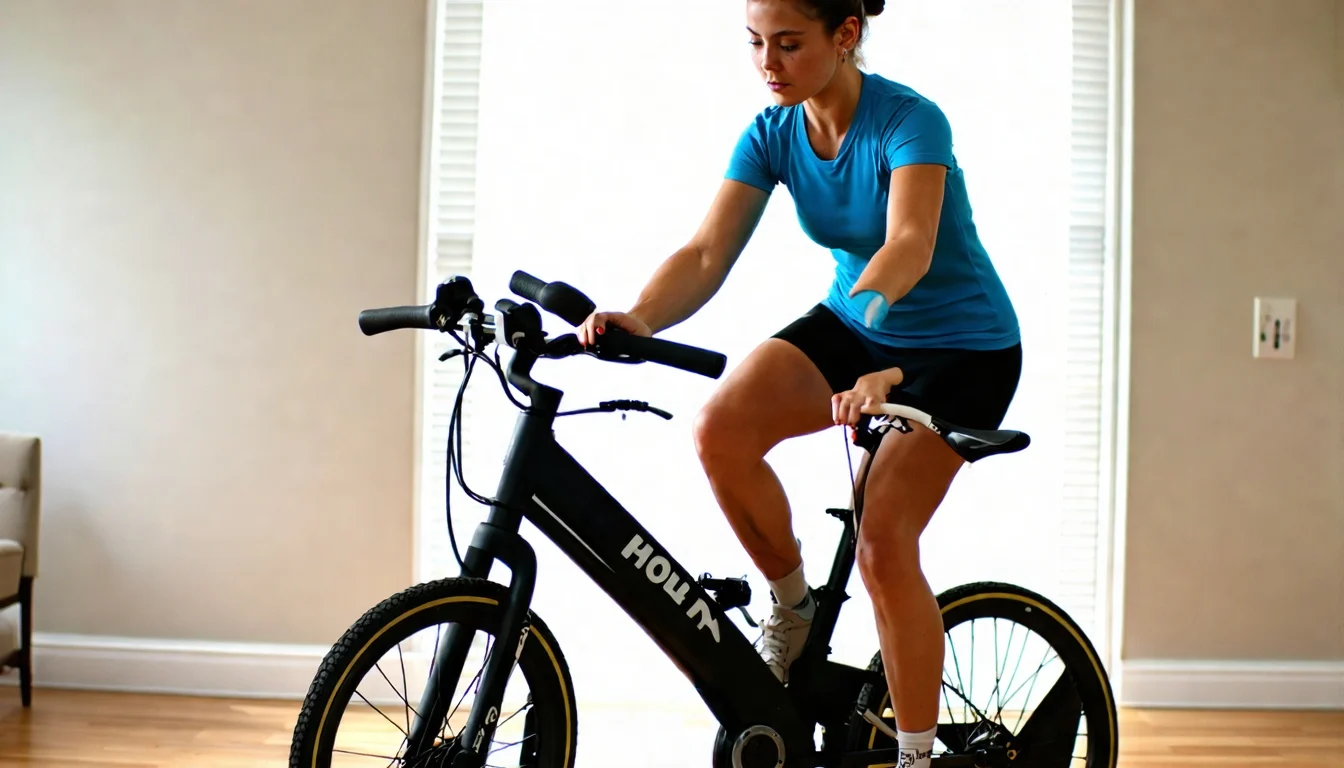
Indoor cycling at home involves riding a stationary bike or a standard bicycle mounted on an indoor trainer to maintain fitness without heading outdoors. You need a dedicated indoor setup comprising a bike or trainer, a sturdy mat, a powerful cooling fan, and a device to run training software like Zwift or Rouvy.
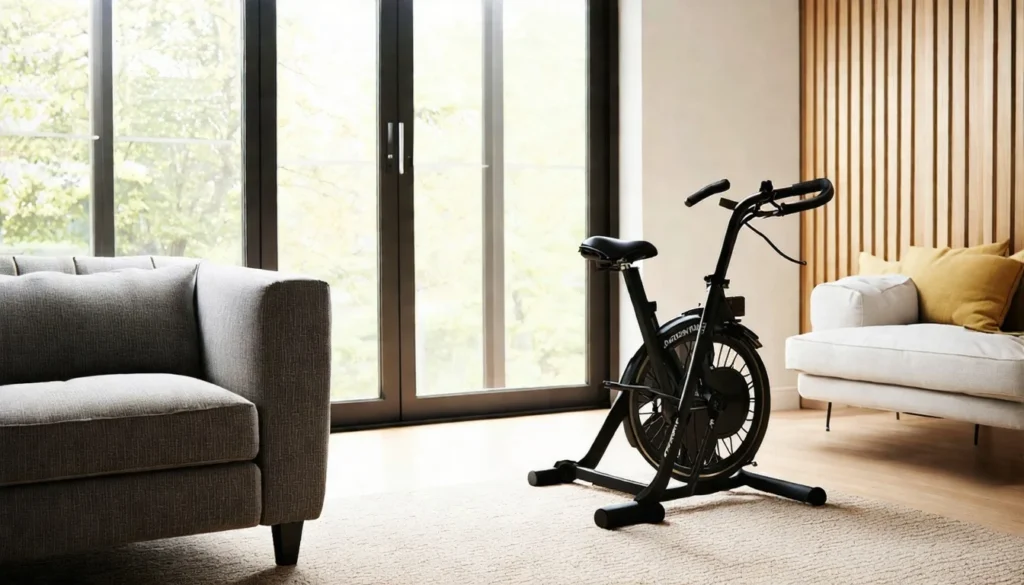
Getting started requires assessing your available space and budget. You can choose between dedicated exercise bikes, smart bikes, or direct-drive smart trainers that accept your existing road or gravel bike. Direct-drive units replace your rear wheel, offering quiet operation, better accuracy, and realistic resistance changes through electromagnetic systems.
Benefits of indoor cycling at home
Training indoors eliminates traffic hazards, unpredictable weather, and coasting, meaning every minute on the bike counts as pure work. You gain precise control over your training intensity using built-in power meters or virtual wattage calculations. Time efficiency stands out as a primary advantage because you step off your bike directly into your home without a long commute back from the open road.
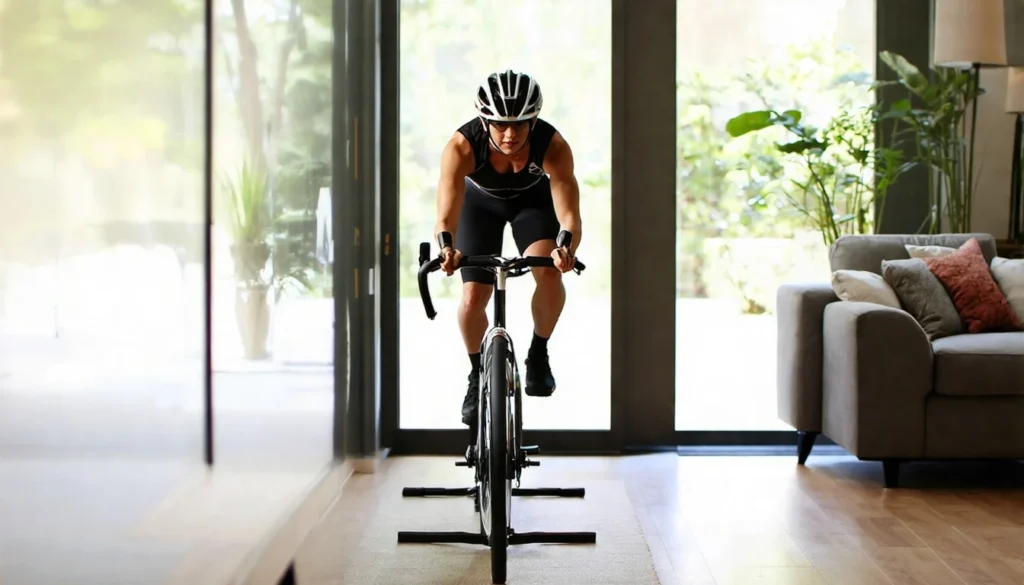
You also build year-round consistency. When winter weather, heavy rain, or darkness limits your outdoor riding schedule, your home setup keeps your cardiovascular fitness intact. Structured apps further enhance these benefits by delivering repeatable, science-based workouts that target specific physiological systems.
Indoor cycling home setup and home gym design
Building a functional indoor cycling home gym requires careful management of sweat, noise, and vibration. You place your trainer on a thick, high-density rubber mat to catch sweat and absorb floor vibrations that might otherwise travel through the ceiling to rooms below.
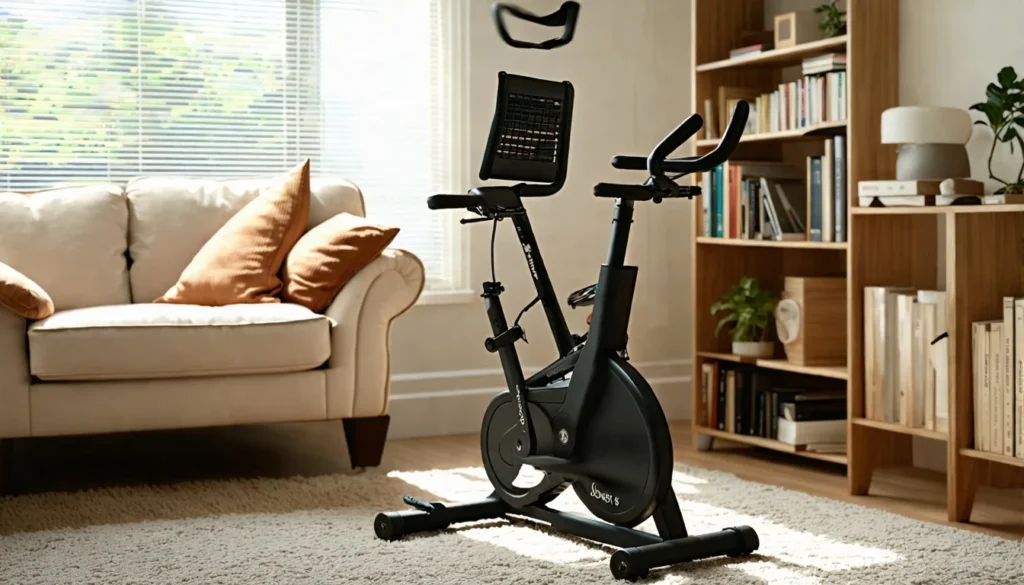
Position your bike facing a sturdy table, desk, or TV stand that holds your laptop or tablet at eye level. Keep a small towel, a water bottle, and a heart rate monitor within arm’s reach before you clip in. Position a high-velocity floor fan directly in front of you. Indoor riding lacks the natural headwind of outdoor cycling. Natural headwind is absent, meaning your body traps heat rapidly and causes heavy perspiration within minutes.
What equipment do you need for indoor cycling at home?
Choosing the right hardware for your home setup depends on your budget, existing equipment, and whether you prefer a dedicated machine or your own road bike. Current equipment options range from budget exercise bikes to advanced smart trainers and integrated smart bikes.
| Equipment Type | Example Model | Approximate Price | Key Difference |
|---|---|---|---|
| Direct-drive smart trainer | Wahoo KICKR CORE | $400 | Replaces your bike’s rear wheel; quiet and accurate. |
| Dedicated exercise bike | Schwinn IC4 | $899.99 | App-agnostic magnetic hardware, fully adjustable. |
| Premium smart bike | Peloton Bike+ | Varies | Gold standard with a rotating screen and auto-resistance. |
| Budget exercise bike | YOSUDA Exercise Bike | $189.99 | Affordable entry-level option with manual resistance. |
Direct-drive units like the Wahoo KICKR CORE (around $400) or Saris H3 Plus (around $480) connect via ANT+ or Bluetooth to training apps. If you want a standalone machine, the Schwinn IC4 costs $799.00, while budget options like the YOSUDA Exercise Bike sit around $189.99. [schwinnfitness.com] For a fully integrated experience, the Peloton Bike+ features a large rotating screen and automatic resistance changes, backed by an All-Access Membership costing $50 monthly as of July 2026.
Indoor cycling home trainer vs exercise bike
Deciding between an indoor cycling home trainer and a dedicated exercise bike depends on your current cycling inventory. If you already own a well-fitted road or gravel bike that you love, a direct-drive smart trainer preserves your exact saddle, handlebar reach, and pedal feel indoors.

Preferences favoring dry sweat-free outdoor bikes or shared family machine use mean a dedicated exercise bike wins. Standalone bikes feature quick-adjustment knobs that accommodate different rider heights in seconds, whereas swapping bikes on a direct-drive trainer requires removing rear wheels and matching axle types.
Indoor cycling classes at home
Virtual training ecosystems transform solitary indoor spinning into engaging, gamified experiences. You choose between simulated virtual worlds, instructor-led video classes, and structured percentage-of-FTP training blocks.

Platforms like Zwift immerse you in computer-generated worlds where your avatar rides alongside thousands of global users, complete with group rides and races. Peloton and Apple Fitness+ deliver studio-style video classes focusing on music cadence, high-intensity intervals, and resistance climbs. Rouvy uses real-world augmented reality video footage to let you climb famous alpine passes from your living room.
How to structure an indoor cycling at home workout
Structuring an effective indoor session requires a proper warm-up, targeted intervals, and a cool-down to manage the lack of natural airflow indoors. You should always use a dedicated fan because 75 to 80 percent of energy expended during cycling is lost as heat.
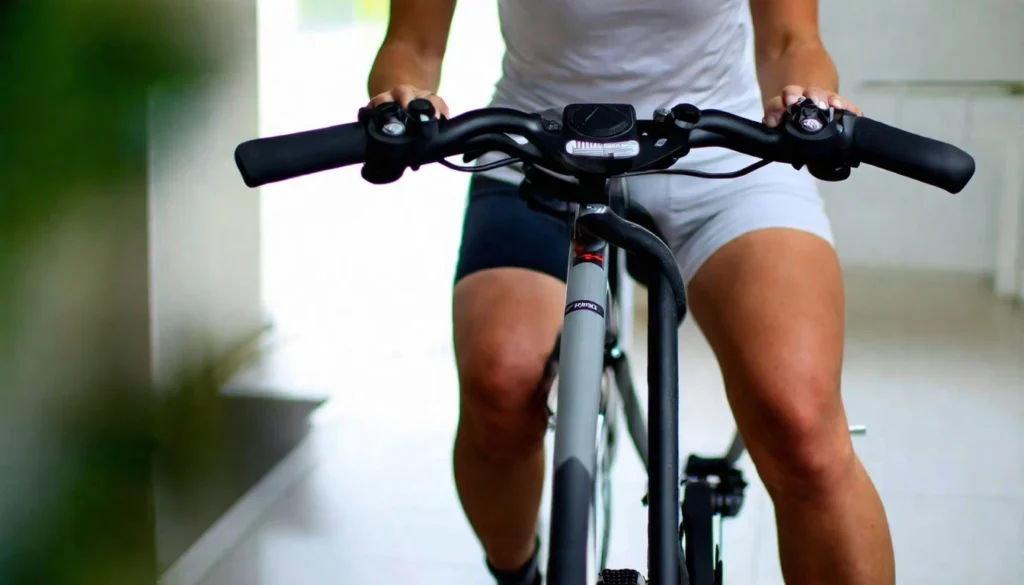
Begin every session with a 10-minute progressive warm-up, increasing your pedalling cadence gradually from an easy spin. Follow this with your main interval set, such as four blocks of four-minute hard efforts separated by three minutes of easy spinning. Finish with a 5-minute easy cool-down to lower your heart rate before dismounting.
Indoor cycling for beginners at home
Starting your indoor cycling journey requires patience as your body adapts to the stationary riding position. You start with shorter sessions lasting 20 to 30 minutes, three times per week, rather than attempting grueling 60-minute classes immediately.
Focus primarily on maintaining a smooth, circular pedal stroke. Push forward over the top of the stroke, pull backward at the bottom, and avoid dead spots in your rotation. Listen to your body and take extra rest days if your sit bones or lower back experience unusual soreness from the static trainer environment.
Who indoor cycling at home does not suit
Indoor cycling at home does not suit everyone. Individuals who despise repetitive motion or find staring at a screen while sweating intensely unappealing will quickly find stationary training frustrating. Outdoor riders craving technical bike handling, descending skills, and shifting scenery miss the dynamic physical feedback of the open road.

Riders living in very small apartments with strict noise rules or fragile flooring also face hurdles. Direct-drive trainers run quietly. However, vibrations from powerful sprinting efforts can disturb downstairs neighbors if you lack proper isolation mats.
How to avoid common indoor cycling mistakes
Avoiding overheating and incorrect bike geometry prevents premature fatigue and repetitive strain injuries during indoor training sessions. You must position a high-velocity fan directly in front of your bike to manage core temperature, mimicking the cooling airflow you experience when riding outdoors.
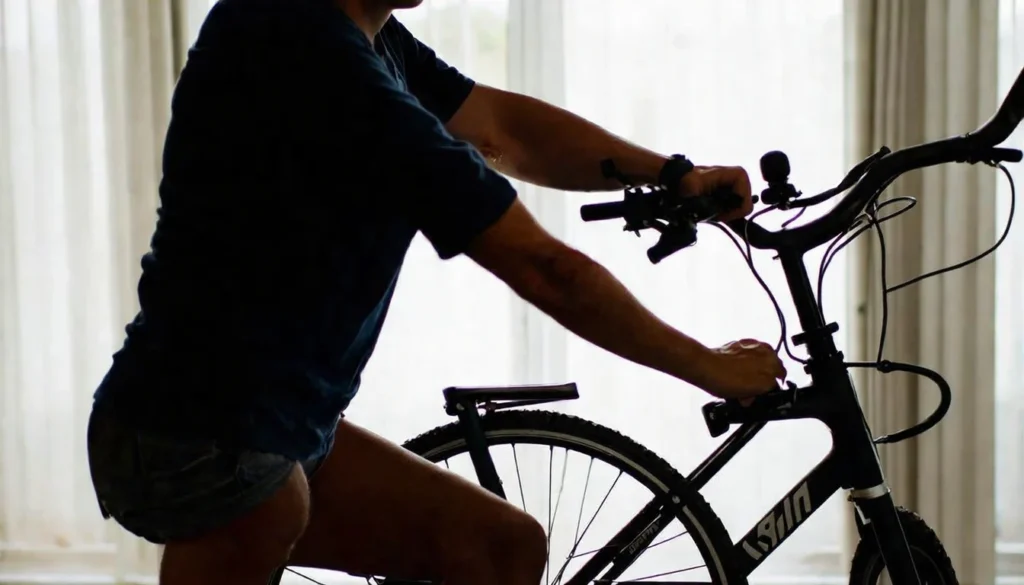
Check your saddle height and handlebar position carefully before starting. Stationary setups do not allow the natural side-to-side sway of outdoor riding unless you use specific rocker plates or a trainer with side-to-side movement, and poor fit can place static loads on your lower back and knees. [wahoofitness.com]
Frequently asked questions
What is the difference between a smart trainer and an exercise bike?
A smart trainer requires you to mount your own bicycle onto a resistance unit, whereas an exercise bike is a standalone machine with its own saddle, handlebars, and flywheel.
Do I need a paid subscription to use indoor cycling apps?
Most interactive training platforms like Zwift or Rouvy require a monthly subscription to access virtual worlds and structured training plans, though basic free tiers or manufacturer apps often provide limited functionality.
How do I keep from sweating too much indoors?
You cannot stop sweating indoors because stationary riding lacks natural wind cooling, so you must use a powerful floor fan and wear lightweight, breathable cycling kit.
Can I use a regular road bike on an indoor trainer?
Yes, you mount a standard road, gravel, or mountain bike onto a direct-drive or wheel-on trainer using compatible axles and cassettes.
How often should I clean my indoor bike setup?
You wipe down your bike frame, handlebars, and trainer with a damp cloth after every sweaty session to prevent corrosive salt buildup from damaging metal components.