
 By Hashim Hashmi

Understanding the variables that dictate calorie consumption is important for an accurate picture. This article explains how factors like speed, terrain, wind resistance, and metabolic efficiency influence your energy expenditure, and how methods such as using a power meter provide the most accurate data.
How Many Calories Does Cycling Burn?
Cycling effectively burns calories, typically ranging from 400 to 1,000 kilocalories (kcal) per hour for most adults. The precise amount depends significantly on your body weight, the intensity of your effort, and the duration of your ride. This energy expenditure fuels muscle movement, converting fats and sugars into adenosine triphosphate (ATP) as you pedal.

Many riders focus solely on the number displayed on their bike computer. However, it is important to understand the variables that truly dictate calorie consumption. Generic calculators and basic fitness trackers often provide estimates that can be off by 15% to 30%, sometimes even more. For a more accurate picture, an understanding of the mechanics of energy expenditure is needed.
Understanding the Calorie Burn Formula
The most common formula to estimate calories burned during physical activity is based on your Metabolic Equivalent of Task (METs), body weight, and duration: Calories = MET × body weight (kg) × time (hours). This formula is a foundational principle in exercise science, providing a standardized way to quantify energy expenditure.
What are METs and How Do They Apply to Cycling?
MET stands for Metabolic Equivalent of Task, which is a physiological measure expressing the energy cost of physical activities. One MET is defined as the energy expenditure of sitting quietly, roughly 1 kcal per kilogram of body weight per hour. When you cycle, your body works harder, and thus its MET value increases.
According to the 2024 Compendium of Physical Activities, cycling MET values vary widely:
- Leisurely cycling (under 10 mph): Approximately 4 METs
- Moderate pace (12–14 mph): Around 8 METs
- Vigorous pace (14–16 mph): About 10 METs
- Racing (over 20 mph): Can reach 16 METs or higher
These values highlight that intensity is paramount. A relaxed ride along a towpath will burn significantly fewer calories than a spirited group ride in the Chilterns. For example, a 70 kg rider cycling at a moderate pace (8 METs) for one hour would burn approximately 70 kg × 8 METs × 1 hour = 560 calories.
How Does Body Weight Affect Calories Burned Cycling?
Your body weight is a primary factor influencing the calories burned cycling. Heavier riders generally expend more energy to move their mass at the same speed compared to lighter riders. This is simply a matter of physics. More mass requires more force to accelerate and maintain speed, especially against gravity on inclines.
Consider two riders on the same route, maintaining the same average speed. A rider weighing 90 kg will burn more calories than a rider weighing 60 kg. Their muscles must work harder to propel the greater mass. This effect is particularly noticeable when climbing hills, impacting the calories burned cycling. The effort to lift body weight against gravity becomes a dominant factor.
What Factors Influence Your Cycling Calorie Burn?
Beyond body weight and duration, several factors collectively determine your total calorie expenditure:

- Speed and Intensity: This is arguably the most significant variable. As your speed and intensity increase, your muscles demand more energy, leading to a higher calorie burn per minute. Pushing harder means engaging more muscle fibers and increasing your heart rate, both of which consume more fuel.
- Terrain: Riding uphill dramatically increases calorie expenditure. Climbing hills can roughly double the METs compared to riding on flat terrain. The surface also matters. Cycling on smooth tarmac requires less energy than on rough gravel or muddy trails, where rolling resistance is higher.
- Wind Resistance: Often underestimated, wind resistance is a major energy drain, especially at higher speeds. Fighting a headwind means your body has to produce more power to maintain pace, directly translating to more calories burned. This is one reason why outdoor cycling can sometimes feel harder and burn more than indoor cycling at a similar perceived effort.
- Bike Type: Different bike types influence your aerodynamic position and rolling resistance. A lightweight road bike with narrow tyres on tarmac will be more efficient than a heavy mountain bike with knobbly tyres on the same surface. While the METs are primarily about your effort, the bike dictates how much effort is needed to achieve a certain speed.
- Metabolic Efficiency: Each individual’s body is slightly different in how efficiently it converts food into mechanical energy. The average human metabolic efficiency for cycling is about 24%. This means 24% of the energy consumed is converted into propulsion, and the rest is lost as heat. This can vary slightly between individuals and training states.
How Many Calories Do You Burn in 30 Minutes of Bike Riding?
For a typical adult, 30 minutes of bike riding can burn between 200 to 500 calories, depending on the intensity. If you cycle at a moderate pace (e.g., 12-14 mph), you might expect to burn around 225–300 calories in half an hour. Increasing your effort to a vigorous pace (15-18 mph) can push that closer to 300–450 calories for the same duration. The key differentiator for calories burned cycling is always the effort you put in.
How Many Calories Does Cycling Burn Per Hour?
As a general guideline, cycling for one hour typically burns between 400 to 1,000 calories. For a moderate cycling pace of 12–14 mph, most riders can expect a calories burned cycling of approximately 450–600 per hour. If you increase the intensity to a vigorous pace of 14–20+ mph, your calorie expenditure can climb to 600–900+ calories per hour. This wide range highlights the impact of individual effort and physical characteristics.
How Much Calories Does Cycling Burn Per Mile or Kilometre?
Estimating calories burned per mile or kilometre is trickier than per hour because speed, terrain, and wind resistance play a much larger role. A flat, fast mile will burn fewer calories than a slow mile climbing a steep hill. However, as a rough guide, a rider might burn around 30–50 calories per mile (approximately 19–31 calories per kilometre) at a moderate pace on flat terrain. This figure can easily double or triple when tackling significant ascents.

We advise against relying solely on distance-based calorie estimates for training or nutritional planning. Time and intensity (power output or heart rate) provide a much more consistent and accurate measure of effort and energy expenditure.
Indoor vs. Outdoor Cycling: Does it Change Calorie Burn?
Yes, there can be subtle differences in calorie burn between indoor and outdoor cycling, even at a matched perceived effort. Outdoor cycling can burn slightly more calories—approximately 5–10% more—due to real-world factors like wind resistance, constantly changing terrain, and the need for continuous balance adjustments. These elements demand additional energy that isn’t present when riding indoors on a static trainer or spin bike.

However, indoor cycling on a smart trainer can sometimes lead to a higher total calorie expenditure for the same session length. This is because riders often maintain a more consistent, higher average power output without coasting, stopping at junctions, or navigating traffic. What is lost in external factors, might be gained in uninterrupted, high-intensity work. For targeted training, a smart trainer is often used to ensure sustained effort for calories burned cycling.
How Power Meters Provide the Most Accurate Calorie Data
For serious cyclists, a power meter offers one of the most accurate, lab-free ways to estimate energy expenditure. This is because power meters directly measure the mechanical work (in kilojoules, kJ) you are producing at the pedals. Due to the average human metabolic efficiency of about 24%, kilojoules of mechanical work produced closely correspond to kilocalories burned.
The conversion is straightforward: 1 kJ of mechanical work ≈ 1 kcal of energy burned. So, if your power meter records 1,500 kJ of work for a ride, you’ve likely burned approximately 1,500 kilocalories. This direct measurement bypasses many of the estimation pitfalls of METs, weight, and general activity levels, making it invaluable for precise training and nutritional strategies.
While power meters are an investment, if a rider is serious about managing their energy intake and output for performance or weight management, they offer the best return for accurate data.
Why Fitness Trackers and Bike Computers Often Overestimate Calories
Many common fitness trackers, smartwatches, and even basic indoor bike consoles often overestimate calories burned cycling. This overestimation can range from 15% to 30% or more. The primary reason for this inaccuracy is that these devices often rely on generic algorithms that make assumptions about your weight, age, gender, and sometimes even a generic drivetrain efficiency, without direct measurement of your actual power output.
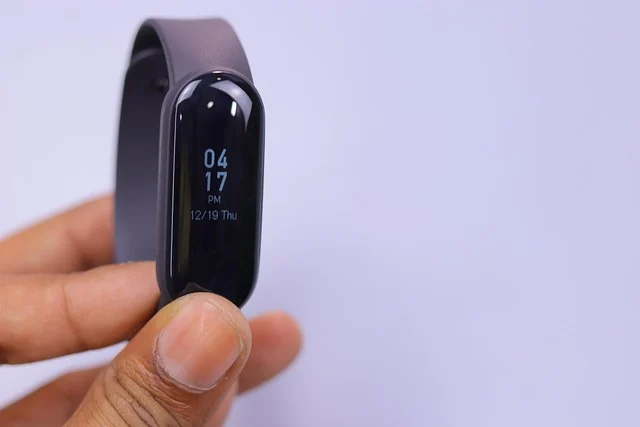
For instance, a tracker might estimate based on heart rate, but heart rate alone doesn’t perfectly correlate with mechanical output or actual energy expenditure for every individual. Factors like stress, caffeine, or even ambient temperature can affect heart rate without changing your work rate. Without a direct measure of power or a highly individualized calibration, these devices are simply making an educated guess.
We always advise riders to take these figures with a pinch of salt. They can be useful for tracking trends over time (e.g., if you burn more calories on today’s ride than yesterday’s), but relying on them for precise dietary adjustments in calories burned cycling can lead to overeating if you’re aiming for weight loss, or under-fuelling if you’re training for an event.
Cycling for Weight Loss: How Many Calories to Aim For?
If your goal is weight loss, cycling is an excellent tool because it’s non-weight-bearing, making it gentler on joints than running, and allows for longer durations, potentially leading to a higher total calorie burn over a week. To lose weight, you need to create a calorie deficit, meaning you burn more calories than you consume.
A common guideline is that a deficit of 3,500 calories equates to approximately 1 pound (0.45 kg) of fat loss. So, if you aim to lose 1 pound a week, you’d need a daily deficit of 500 calories. If you’re burning 600 calories an hour cycling, you could achieve a significant portion of that deficit through your rides.
High-Intensity Interval Training (HIIT) on a stationary bike can be particularly effective. It burns 25–40% more calories per minute than moderate steady-state cycling. HIIT also generates a significant “afterburn” effect, known as Excess Post-exercise Oxygen Consumption (EPOC). This can keep metabolism elevated for 12–48 hours after a session, burning additional calories. Short, sharp intervals are often incorporated into training for optimal calories burned cycling.
However, it’s a common mistake to think you can simply “out-exercise” a poor diet. Nutrition plays a far larger role in weight loss than exercise alone. Cycling helps create the deficit, but mindful eating is essential for sustained results. For specific dietary advice, we always recommend consulting a qualified nutritionist to understand your calories burned cycling.
This approach, often called polarized training, aims to build a strong aerobic base while allowing for adequate recovery and preventing overtraining. It’s not directly related to calorie burn percentages but rather to the distribution of training intensity for optimal performance and health.
How Much Biking Equals 10,000 Steps?
Converting cycling distance or time to an equivalent number of steps is not an exact science. This is due to different mechanics and muscle engagement. However, a commonly cited rough estimate is that 1 mile (approximately 1.6 km) of cycling is equivalent to about 2,500 steps, or 10–12 minutes of cycling. Therefore, to equate to 10,000 steps, you would typically need to cycle around 4 miles (6.4 km), or for approximately 40–50 minutes, at a moderate intensity. Keep in mind this is a very generalized comparison, as the calories burned cycling and physiological benefits will differ.

Frequently asked questions
Can I lose belly fat by cycling?
Yes, cycling can contribute to losing belly fat as part of overall weight loss. When you cycle, you burn calories, which helps create the calorie deficit necessary for reducing body fat, including visceral fat around the abdomen. Consistent cycling combined with a balanced diet is an effective strategy for body composition changes.
How many calories does cycling burn compared to running?
Cycling generally burns fewer calories per minute than running at the same perceived effort because it is a non-weight-bearing activity. However, cycling is gentler on the joints, allowing many people to sustain longer durations or higher volumes of exercise, which can lead to a greater total calorie burn over a single session or a week.
What is a good average calorie burn for a typical cycling workout?
A good average calorie burn for a typical cycling workout varies greatly by individual and intensity, but for most riders engaging in a moderate 60-minute session, a burn of 450–600 calories is a reasonable target. More intense or longer rides will naturally increase this number.