
 By Hashim Hashmi
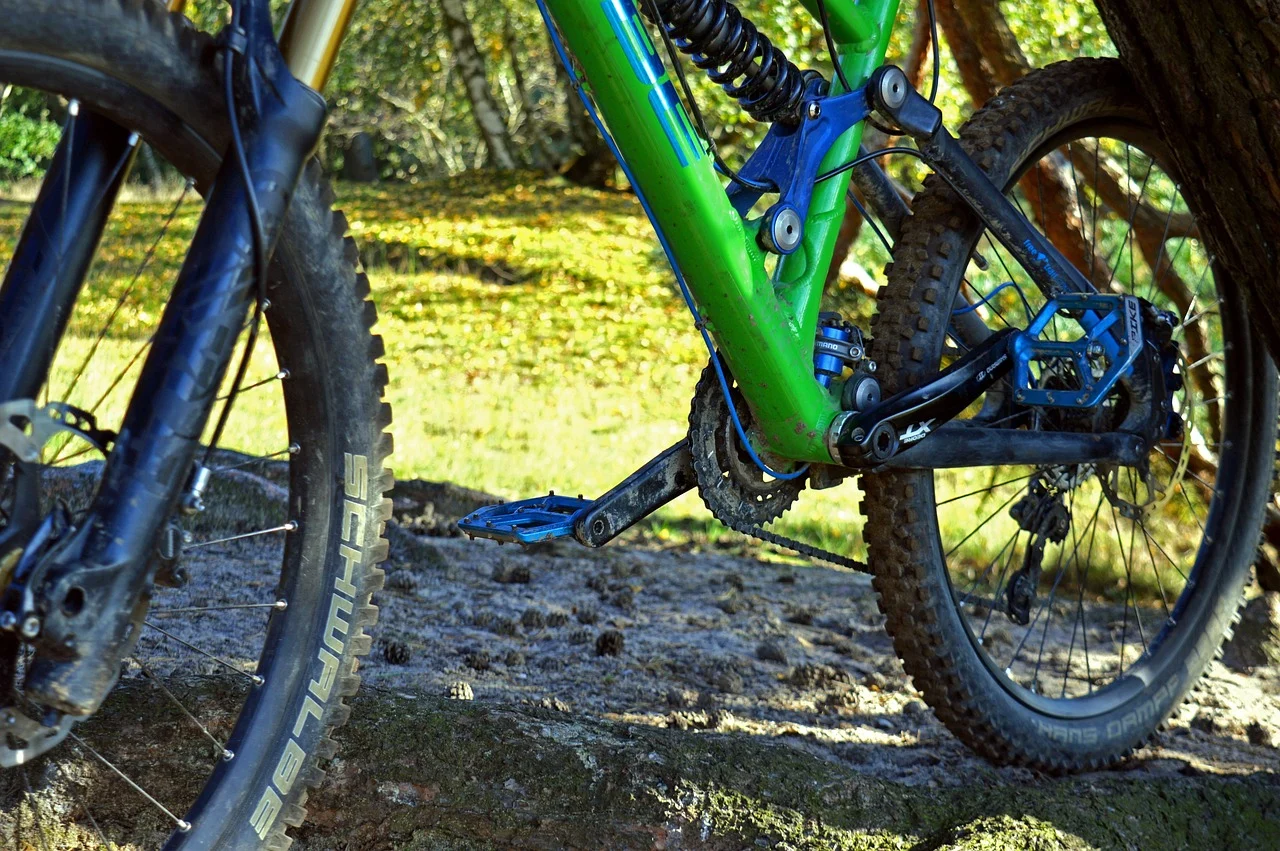
Bike chain speeds refer strictly to the number of cogs on the rear cassette that a specific chain is engineered to fit, rather than the total number of gears on your bicycle. When you look at modern drivetrains, understanding this metric helps you avoid catastrophic shifting failures, premature component wear, and costly drivetrain replacements.
Many riders confuse chain speeds with the total gear count—multiplying front chainrings by rear cogs—which inevitably leads to purchasing the wrong replacement hardware. Every modern bicycle chain shares a standard pitch, meaning the distance between pins remains a constant half-inch or 12.7 millimetres. However, manufacturers pack more sprockets into the restricted space of a rear wheel hub. This forces the external width of the chain to shrink. Such narrowing allows the chain to navigate tightly spaced cogs without rubbing against adjacent gears. When looking at how modern groupsets have evolved, from traditional 8-speed setups all the way to contemporary 13-speed systems, mastering these dimensional differences is the single most important part of keeping your gears indexing cleanly.
Bike chain speeds explained and how to identify yours
Counting the number of sprockets on your rear cassette determines your bike chain speed, and you match that exact number to the chain. We recommend checking your cassette manually or inspecting the stamping on the existing chain links if you need to verify compatibility before ordering a replacement.
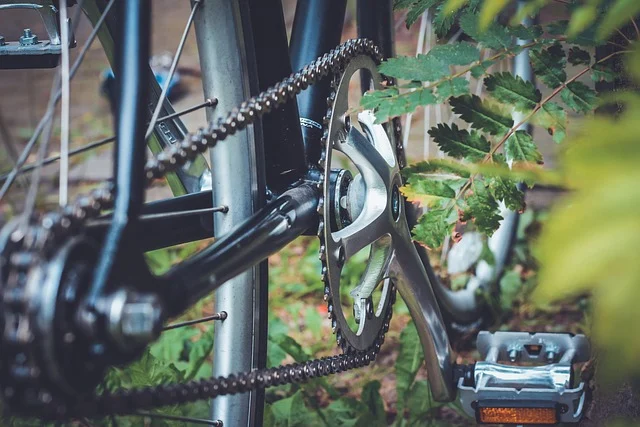
Many riders make the mistake of guessing their chain speed based on the model year of their frame or the brand of the crankset. That approach rarely works because components get swapped out over time. If you ride a bike equipped with an 11-speed cassette, you must run an 11-speed chain. Failing to match these numbers results in poor shifting performance, excessive chain noise, and potential chain drop when you apply heavy pedal pressure under load. In workshop maintenance experience, putting a wider chain onto a narrower cassette spacing causes the outer plates to catch on neighboring cogs, while putting a hyper-narrow chain onto a wider, older cassette can lead to the chain slipping down between the gaps entirely. Always count the individual cogs on the back wheel first, and treat that number as an absolute rule.
How do chain widths and dimensions change across speeds?
Chain widths decrease progressively as the speed count increases, with 6-to-8 speed chains measuring around 7.0 to 7.3 millimetres wide, while 12-speed chains narrow down to about 5.3 millimetres. [parktool.com] These fractions of a millimetre dictate how safely the links interface with your chainrings and cassette teeth.
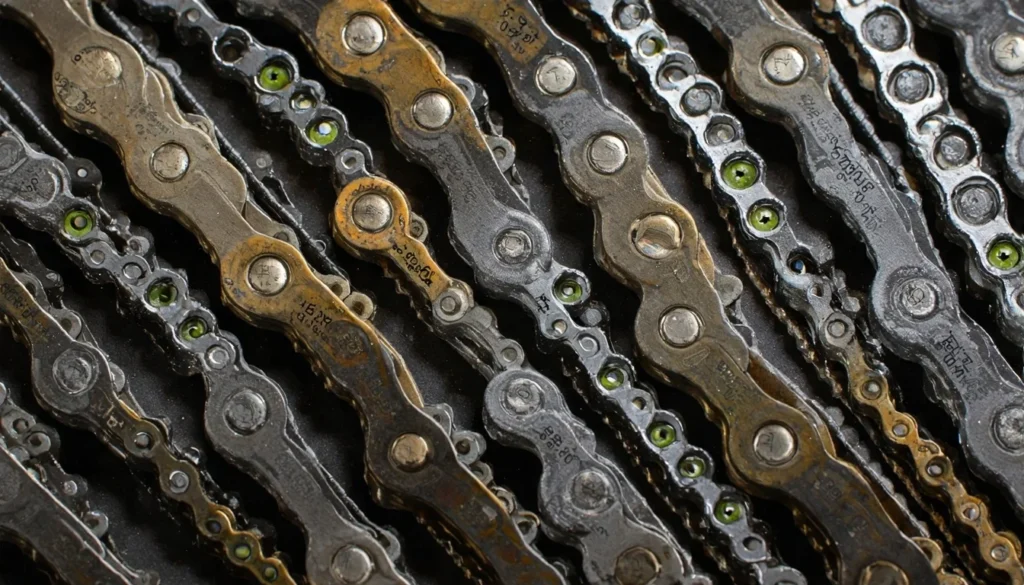
To give you a clearer picture of how these dimensions scale across the market, the standard external widths are laid out according to industry specifications:
| Chain Speed | Typical External Width | Primary Application |
|---|---|---|
| 6, 7, and 8-Speed | 7.0 – 7.3 mm | Older road bikes, entry-level hybrids, commuter bikes |
| 9-Speed | 6.5 – 6.8 mm | Older mountain bikes, budget touring setups |
| 10-Speed | 5.84 – 6.3 mm | Mid-range road and mountain drivetrains |
| 11-Speed | 5.46 – 5.9 mm | Widespread modern road, gravel, and mountain setups |
| 12-Speed | 4.9 – 5.4 mm | High-performance modern 1x and 2x systems |
| 13-Speed | 4.9 mm | Advanced gravel and high-end road systems like Campagnolo Ekar |
When you look at this progression, the engineering challenge becomes obvious. Manufacturers have to make the steel plates thinner to fit more gears into the same overall hub spacing, yet maintain tensile strength so the chain does not snap when you mash the pedals up a steep British climb. This is why high-speed chains use advanced alloy steels and hollow pins. If you run a 6-speed chain on a modern 12-speed cassette, the physical width of the chain will simply jam between the cogs. Conversely, running a 12-speed chain on an 8-speed drivetrain means the chain is too narrow, causing it to slip deep between the widely spaced teeth and fail to engage properly.
Can a bike chain be too long and what happens if it is?
A bike chain can indeed be too long, which causes severe chain slack, poor rear derailleur tension, and a high risk of the chain dropping off the chainrings when you ride over rough terrain. Sizing a chain correctly requires a systematic approach to ensure safety and efficient power transfer.

Mechanics always use a reliable calculation method in the workshop to size a new chain and avoid guesswork. For a standard derailleur bike, you thread the chain through the largest front chainring and the largest rear cog, bypassing the rear derailleur entirely, and then add one full inner link and one full outer link to that measurement. If your chain is too long, the derailleur cage swings all the way forward, leaving the lower loop completely limp. When this happens, backpedalling or hitting a pothole will throw the chain off instantly. On the other hand, if your chain is too short, shifting into your lowest climbing gear risks ripping the rear derailleur straight off its hanger or seizing the drivetrain completely, which can throw you over the bars. Always double-check your sizing before you push the connecting pin home or secure your master link.
Why does a bike chain get loose over time?
A bike chain gets loose because the internal steel pins and rollers wear down from friction over thousands of revolutions, causing the overall pitch to elongate. This phenomenon is commonly known as chain stretch, and it ruins your cassette teeth if you let it go unchecked.
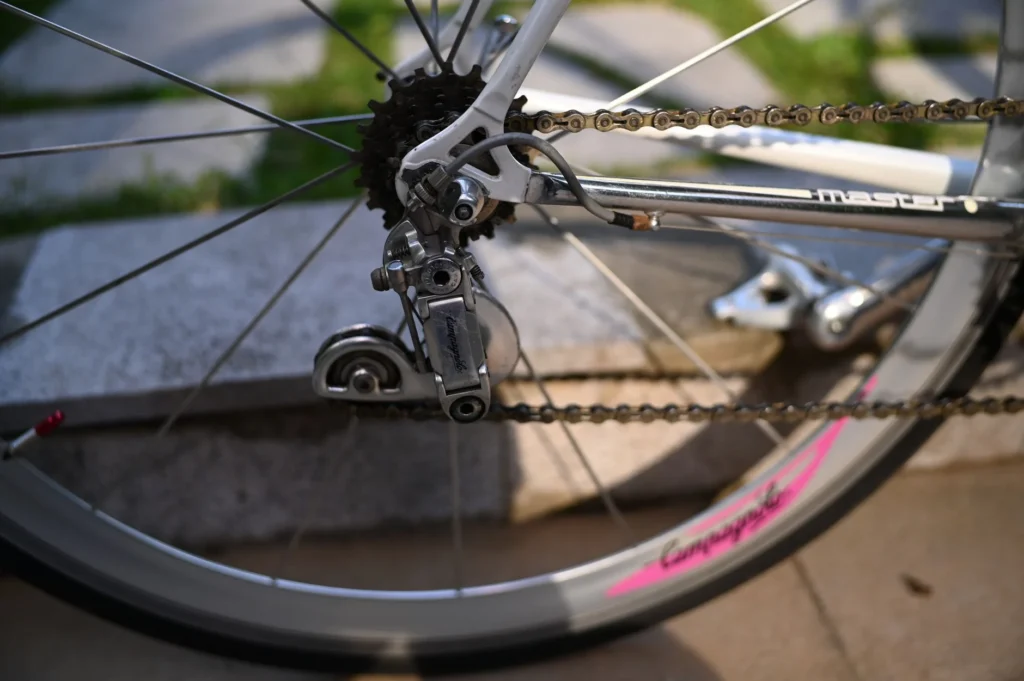
Every time you pedal, tension pulls on tiny cylindrical pins inside each roller. Over months of riding in rain, grit, and road grime, abrasive paste forms inside pivots, eating away at the metal. Pins thin out and inner plates wear, increasing the distance between each roller. For 10-speed systems and below, experts advise replacing your chain when wear reaches 0.75% elongation. Tolerances are much tighter for 11, 12, and 13-speed chains. You must swap out the chain as soon as elongation hits 0.5%. Ignoring these numbers and keeping a worn chain causes elongated spacing to rapidly deform expensive steel teeth on your cassette. Putting on a brand-new chain then results in skipping, forcing you to replace the cassette and chainrings alongside the chain.
Are chains cross-compatible between different brands?
Chains up to 11-speed from major brands like Shimano, SRAM, and KMC are generally cross-compatible, but 12-speed and 13-speed chains are largely brand-specific due to proprietary tooth profiles and specialized plate shapes. We always advise checking manufacturer guidelines before mixing brands on high-end drivetrains.
Up to the 11-speed threshold, internal dimensions and roller widths are close enough that a KMC chain works smoothly on a Shimano or SRAM transmission. However, modern 12-speed engineering changes the game entirely. SRAM Flattop chains, which are standard on 12-speed AXS road setups, feature unique plate dimensions and larger rollers. These rollers will not sit correctly on a Shimano Hyperglide+ chainring or cassette. Similarly, Shimano’s 12-speed chains are optimized to work with specific ramp profiles on their own cassettes to facilitate faster shifting under load. Mixing these proprietary systems causes grinding noises, hesitation during shifts, and accelerated wear on your chainrings. Sticking to the manufacturer of your cassette for your chain choice at 12 and 13 speeds guarantees smooth shifting and protects your investment.
How to replace your bike chain step by step
Replacing your bike chain requires basic workshop tools and a methodical approach to ensure the new link is secure. Follow these steps to complete the job cleanly:
- Shift your chain onto the smallest rear cog and the smallest front chainring. Therefore, this will relieve all spring tension from the rear derailleur.
- Use a chain breaker tool to push the pin out of an old link, or open your existing master link using pair of master link pliers.
- Remove the old chain from the bike completely, taking note of how it threads through the derailleur cage pulleys.
- Lay your new chain next to the old one on a workbench, matching the exact number of links. Shorten the new chain using your chain breaker if necessary.
- Thread the new chain through the front derailleur, over your chainring, behind the frame, and through the rear derailleur cage pulleys following the correct S-path.
- Connect the two ends using the speed-specific quick link supplied with your new chain, pulling firmly on the pedals to snap the link securely into place.
When you complete these steps successfully, the chain should run smoothly through the derailleur pulleys without rubbing against the cage walls, and the pedals should spin freely in both directions without binding.
Frequently asked questions
Can I use an 11-speed chain on a 12-speed bike?
No, you cannot use an 11-speed chain on a 12-speed bike because an 11-speed chain is too wide to fit between the tightly spaced cogs of a 12-speed cassette. Using an incompatible chain will cause poor shifting and potential mechanical failure.
Are 7 and 8 speed chains the same?
Yes, 7 and 8-speed chains are completely interchangeable because they share the exact same internal width and external dimensions. You can use either one on any 6, 7, or 8-speed derailleur drivetrain.
Can I reuse a quick link when I remove my chain?
Most 11, 12, and 13-speed quick links are designed for single use and must be discarded after removal to prevent unexpected failure under load. Always install a fresh quick link whenever you break the chain.