
 By Hashim Hashmi
This article covers speed classes, legal limits, performance factors, safety equipment, and common mechanical issues associated with high-speed electric bicycles.
What is the fastest electric bike?
The fastest electric bike depends entirely on whether you mean a street-legal commuter or an extreme off-road machine. High-end models like the HPC Revolution W reach up to 80 mph on private land. Street-legal options, by contrast, are capped at lower speeds to comply with local laws.
When you start researching the fastest electric bike options, you quickly realize that the market splits into two distinct categories. On one side, you have factory-built machines designed strictly for private land, featuring motors rated at 10,000 watts or higher. On the other side, you have street-legal commuter bicycles restricted by law to protect other road users.
| Model | Top Speed | Power Output | Approximate Price |
|---|---|---|---|
| HPC Revolution W | Up to 80 mph | 10,500W | $29,995.00 |
| HPC Revolution XX | 60-70 mph | 10,000W | $13,000.00 |
| Sur-Ron Light Bee X | ~47 mph | Varies | Varies |
| HappyRun G100 Pro | 50 mph | Varies | $1,599.00 |
As you can see from the figures above, machines capable of extreme velocities command a significant financial premium. They are generally restricted from public cycle paths and highways.
What is the fastest electric bike in the world?
Custom-built hyper-bikes hold the crown for the absolute fastest electric bike in the world. Specialized engineering projects and boutique manufacturers push past 80 mph. You cannot buy these machines at a standard local bike shop. You order them directly from custom builders who source components from the motorcycle industry.
When you evaluate models like the HPC Revolution W, you look at a machine. It uses a dual-chain drive system, massive lithium battery packs exceeding 72 volts, and heavy-duty motorcycle suspension. These bikes generate immense torque, which allows you to accelerate from a dead stop faster than many entry-level gasoline motorcycles. However, this extreme performance strips away the core characteristic of a bicycle. You cannot legally pedal these units on public infrastructure as standard bicycles.
What is the fastest electric bike on the market for adults?
If you search for factory-produced models available to adult consumers without requiring a bespoke custom build, options like the HappyRun G100 Pro and various high-powered fat-tire designs deliver speeds around 40 to 50 mph. These units blur the line between e-bikes and light electric motorcycles.
When you ride a 50 mph adult e-bike, you manage a total vehicle and rider weight. This frequently exceeds the standard limit moving at highway speeds on bicycle tires. You must assess your own riding skill, reaction times, and protective gear requirements. Standard bicycle helmets fail to protect you adequately at speeds above 30 mph. You require a DOT-certified full-face motorcycle helmet and body armor.
What is the fastest electric bike with pedals?
True pedal-forward designs maintain functional bicycle capabilities while offering high speeds. They usually top out at the Class 3 threshold of 28 mph for legal street use, though off-road variants can push higher.

When you pedal an e-bike at 28 mph, your legs spin at a very high cadence. Manufacturers must gear the chainring and cassette appropriately. Torque-sensing bottom brackets deliver power smoothly as you apply pressure to the pedals. Cadence sensors act purely as an on/off switch for the motor. If you want a fast electric bike that still feels like a traditional bicycle, you must choose a mid-drive motor with a high-end torque sensor. Avoid a rear-hub motor with a cadence sensor.
What is the fastest electric bike on Amazon and under $1000?
Online marketplaces feature numerous budget-friendly brands claiming top speeds of 30 to 35 mph for under $1,000. You must approach these claims with caution.

When manufacturers build an e-bike to sell below $1,000 while promising high speeds, they frequently cut corners on critical safety components. You often receive lower-tier battery cells lacking proper thermal management systems. Other compromises include mechanical cable-pull disc brakes instead of hydraulic units, and frames stamped from lower-grade aluminum. If you purchase an inexpensive high-speed e-bike on Amazon, you take on the responsibility. Riders must inspect the wheel alignment, bolt torque, and brake pad wear frequently.
How fast do electric bikes go legally on public roads?
Street-legal electric bikes in the United States generally reach a maximum speed of 28 mph. This happens when utilizing pedal assistance in a Class 3 configuration. Most standard models limit motor-only throttle speeds to 20 mph.
Understanding legal classifications helps you avoid hefty fines and ensures your insurance remains valid if you ride on public asphalt. The U.S. federal government defines a low-speed electric bicycle as having operable pedals and an electric motor under 750 watts. States often group these into three distinct classes:
- Class 1: Pedal-assist only, stopping assistance at 20 mph.
- Next, Class 2: Throttle-assisted, stopping motor power at 20 mph.
- Class 3: Pedal-assist only, providing assistance up to 28 mph.
If you want to ride a fast commuter bike to work, you must ensure it meets these class criteria. Jurisdictions are tightening enforcement on modified machines that exceed these parameters without proper licensing.
Which e-bike goes 70 mph?
High-end custom and boutique electric bikes like the HPC Revolution W and HPC Revolution XX achieve speeds between 60 and 80 mph. They use massive battery arrays and high-wattage mid-drive motors. These vehicles are designed for off-road trails, private tracks, or specialized motorsport events rather than urban commuting.

Achieving these velocities safely requires motorcycle-grade components. Standard bicycle frames, rim brakes, and commuter tires cannot handle the thermal loads and kinetic forces generated at 70 mph. Manufacturers of these ultra-fast machines equip them with solid downhill suspension forks, multi-piston hydraulic disc brakes, and heavy-duty motorcycle tires.
Concrete steps to test and verify e-bike speed safely
If you purchase a high-speed e-bike and want to verify its actual performance limits without risking a crash on public roads, you must follow a methodical testing process:

- Find a controlled environment: Transport your e-bike to a private track, closed parking lot, or off-road trail network. Such locations provide clear sightlines and zero pedestrian traffic.
- Inspect critical fasteners: Check the axle nuts, handlebar stem bolts, and brake caliper mounting screws with a torque wrench. Proper tightening ensures nothing vibrates loose under high-speed harmonics.
- Verify GPS speed: Mount a dedicated GPS cycling computer or a securely tethered smartphone to your handlebars. Factory speedometer displays on budget e-bikes frequently inflate top-speed readings by 10 percent.
- Perform gradual acceleration runs: Start from a dead stop, apply throttle or pedal assist incrementally. Monitor motor temperature and braking responsiveness as you approach peak velocity.
- Test emergency stopping distance: Accelerate to 20 mph first. Apply both brakes firmly and measure your stopping distance before attempting higher-speed braking tests.
Common problems with ultra-fast e-bikes and their fixes
Pushing electric bicycle components past standard manufacturing limits introduces specific mechanical and electrical issues:
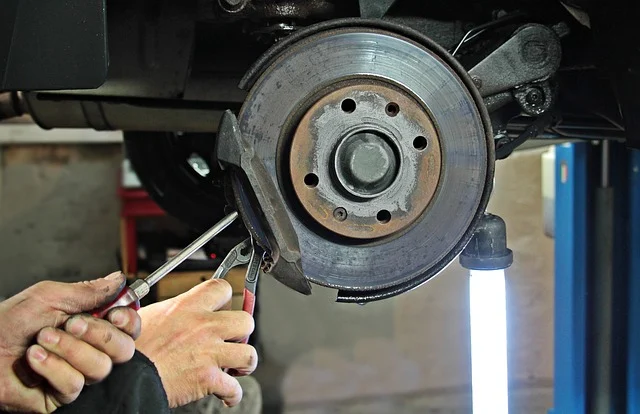
- Brake fade and rotor warping: Descending at 45 mph generates intense friction heat that warps thin bicycle rotors. Fix this by upgrading to heavy-duty, vented 203mm hydraulic rotors and metallic brake pads.
- Voltage sag under heavy load: Twisting the throttle on a cheap high-speed e-bike causes the battery voltage to drop sharply. Severe drops trigger low-voltage cutoffs. Fix this by investing in packs with high continuous discharge amperage ratings (BMS limits).
- Chain and sprocket wear: High mid-drive motor torque shreds standard bicycle chains in weeks. Fix this by switching to e-bike-rated heavy-duty single-speed chains and steel chainrings.
- Controller overheating: Drawing 2000W+ through a compact motor controller causes thermal shutdowns. Fix this by mounting the controller externally in the airflow or adding aluminum heatsinks.
Who ultra-fast electric bikes do not suit
High-speed electric bikes generating over 30 mph of velocity do not fit every rider or commuting style. You should avoid purchasing an ultra-fast machine if you fall into any of these categories:
- Urban bicycle lane commuters: If your daily route requires navigating crowded multi-use paths crowded with pedestrians, children, and traditional cyclists, a 50 mph machine creates unacceptable collision risks and violates local laws.
- Riders with limited mechanical aptitude: High-speed bikes require constant maintenance, spoke tension checks, and electrical troubleshooting that local bicycle shops often refuse to service due to liability policies.
- Budget-conscious buyers: Purchasing the bike is only your initial expense; replacement motorcycle tires, heavy-duty brake pads, and high-capacity battery servicing increase your ongoing operating costs significantly.
- Physically rehabilitation riders: If you seek an e-bike for gentle fitness recovery or low-impact outdoor exercise, a heavy, throttle-heavy hyper-bike encourages a sedentary riding posture.
What should you watch out for when buying a fast e-bike?
Buying a high-speed electric bicycle requires careful attention to changing legal frameworks. Recent legislation across various states has introduced stricter registration and licensing mandates. For instance, California’s SB 1167 prohibits selling or advertising devices faster than 20 mph on throttle or 28 mph with pedal assist as standard e-bikes without clear disclosures, while states like New Jersey have reclassified certain high-speed devices as motorized bicycles.
If you purchase a budget machine advertised with extreme speeds, check the build quality of the battery management system. Pushing high current through cheap cells creates significant fire risks. Always verify local regulations before committing your money to a machine that might be banned from your local bike paths.
Frequently asked questions
What is the fastest street-legal electric bike?
Class 3 electric bikes represent the fastest street-legal option, providing pedal assistance up to 28 mph while adhering to local power and equipment regulations.
Do I need a license for a fast electric bike?
Most standard Class 1, 2, and 3 e-bikes do not require a driver’s license or registration in jurisdictions following the standard three-class system. However, newer state laws may require registration or licensing for devices exceeding standard thresholds.
How fast do electric bikes go?
Standard electric bikes reach speeds between 20 mph and 28 mph depending on their legal class, while custom off-road and hyper-bikes achieve anywhere from 40 to 80 mph.
Can you pedal a 70 mph electric bike?
You can physically pedal some high-speed custom e-bikes, but at 70 mph, human pedaling input becomes entirely ineffective because the gearing cannot match the wheel speed.